Your blog post
Blog post description.
11/16/20258 min read
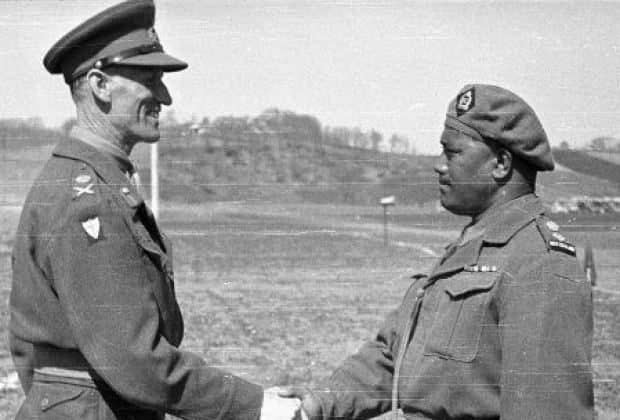
Arapeta Awatere: A Soldier's Story.
Important quotes from text
"My definition of culture is that 'it is a people's gross way of life." Of course I am saying what the researchers have already stated, but I am saying it as a layman, as one of those who live the Maaori culture.
I speak of one heretofore inarticulate, somethings I am looked upon as a relic curio from some primitive world, sometimes considered not able to think or to act for himself and sometimes discriminated against. Do you remember an incident when an honourable member of the Māori people, a man with hard-earned diplomas and high medical qualifications, was in a hotel at Papakura where citizens enjoyed a social drink? He was refused a drink. What an insult! His four brothers fought in the Second World War to secure our way of life. And they were volunteers! One brother had his leg and thigh blown off! Yes, Dr. Henry Rongomai Bennett, now superintendent at the Tōkānui Hospital. Do you remember how some apologists rushed to say it was not a colour bar, it was social bar? What nonsense! No amount of talking can explain that one away.
To speak as one of the oft-researched Māori people is interesting. I acquire the view and attitude of a guinea pig, into whom researchers stick pins to discover what makes the animal and his culture tick. I also acquire a sense of humour. Wouldn't it be fun one day to take the researcher's pins, stick them into his lower anatomy, then let him relate how and what makes him and his culture tick?" pg 49.
"You will hear some people say there is one culture, the New Zealand culture. Don't you believe it! Ask them straight away to recite their whakapapa. Be they Māori or non-Māori. You will find few will be able to go beyond their four grandparents. They will probably shrug their shoulders and say, Why should I remember? They may even add, They are nothing but names to me. You cannot earn more money by learning and knowing whakapapa. They are immediately on the defensive. They show little interest and respect for those ancestors responsible for bringing them into the world. People of this kind exist aplenty in modern New Zealand. The fun is that some people decry aloud another culture about which they know little. Culture is as much an inward and spiritual thing as are the things of the environment. To evaluate everything in economic or money terms, or money earning potential only, is to express a materialistic attitude. Where will such attitude get us in the end? Atomic bombs, products of the materialistic attitude, are omnipotent giants of evil that loom in the minds of people creating constant fear, unrest and happiness!...History means the performance, the living, the achieving of goals, the methods, the successes, the failures, the human effort, the impact on the way of life, in fact, the life cycle of some person, thing, activity, or human undertaking." pg 73
"Bishop Bennett had a family whose achievements in scholarship, politics, education, and leadership cannot be matched by those of any Māori family of today. Most of them were well-educated with university degrees, were officers in the army and the navy. Maybe you have guessed. Colonel Charles Te Moihi Bennett and his brothers and cousins. Honihana Rogers married Moana Gossett, who was the daughter of William Gossett and Anne Kahupo Baker of Dargaville... I wanted to remind you that your family traditions do not lie only on my side of your lineages. However, I am aware of mine. So I inform you with the hope that my mokopuna, Peter, may be able to carry some of those traditions. I am making an effort to introduce him into the fold of my lineages. Others can, if they desire, introduce him into theirs." 89
"Set the whakapapa afresh on a big scroll of paper. Where I have made references to any ancestors, note them in small writing against the name. By doing this, the whole will become meaningful, and those ancestors somehow will come to life. Learning by rote the long names makes them impersonal and cold. If you persist, after a while, the names will become living persons in your mind. They will seem closer to you. These ancestors lived a kind of Māoritanga in which they took pride. They built it as a foundation to pass on to us today. We have added to or subtracted from that foundation. In our time, we pass on our form of Māoritanga. Many are trying to perpetuate, while others are clueless and apathetic. Some are too busy thinking about the materialistic side of life, thinking and chasing their almighty dollar. The younger generation, now by migrating to the urban environment for socio-economic reasons, are finding the going very hard. Some are falling into worthless, degrading practices, ways of modern criminals, and are therefore degrading the tipuna. I suppose this is the price of citizenship into the modern New Zealand culture." 92
"I had the opportunity to be promoted to higher rank and command the 28th New Zealand Māori Battalion much earlier than when I finally commanded it. The late General Freyberg, a close friend, quietly told me that there was strong opposition from my elders at home against my taking over. This opposition was particularly led by the late Sir Apirana Ngata, who had two seemingly fair reasons. One, because when I was a company commander, regardless of never failing to achieve the objective, the casualties of my company had been high compared with those of other companies. I think he had not forgotten how I had led the Ngāti Porou Company C at Point 209 with 128 men and ended up with 31 survivors. Lieutenant Moana Ngārimu had passed away in the severe hand-to-hand fight. Even when I came home, the old gentleman quietly hinted at it, even though Moana Ngārimu had won the VC. This did not quell the old gentleman's feelings, as if I had caused the disaster on purpose. Two, he and my tribal elders had remembered whetū kamokamo, his pig-headedness, and his urutomo tactics. Being farmers and breeders of stock, they may have thought that a hack horse begets a hack horse, therefore traits likely to be repeated in the progeny. Sir Apirana was good enough to tell me when I arrived home what my friend General Freyberg had already whispered to me. He said they were afraid I would burn up the sons of the Māori people. It made no difference to me, because it was not the Māori people who sent me to war. The matter was decided between your mother and myself. We both weighed the pros and cons, then agreed that I should go. And we had four children then, so I went as a buck private with no vision or ambitions of rising in rank. I went to pull my weight so that you, my children and descendants could hold your heads up, thankful that your family did share in the national effort." 93-94
"Before I come off this long life story, I must say that I may appear to be wandering all over the place. That is not so. As incidents come into focus, I add the comments there and then to make clear my own attitudes … and so on … about each incident. After all, each is part of the background of the life story of this great man, Tuwhakairiora. And as his Taiaha is about to be yours, it is only fair that you feel the presence and inspiration of the man, as if he is still breathing. In this way, your Te Puna will really become part of you, will accompany you wherever you go, will uplift your morale at times, and in some instances, will point the way to honourable conduct." 95
Let us go back to Hawaiki. I know that here we are lost in the merging of history and mythology. I cannot tell you where this particular Hawaiki is. I hazard a guess it might have been the island of Hawaii, where there is a place called Whangara. In Hawaiki lived Uenuku, a paramount chief. By a lowly wife he had a son, Ruatapu. Then he married a woman of rank and they had a son, Kahutia Terangi. One day while Ruatapu was kite flying, his kite landed on the Tuanui, the roof of Uenuku's house. Ruatapu climbed to recover it. Who is it who dares to climb and desecrate my roof? said he. It is I, Ruatapu, your first born, came the reply. Oh, I thought it may have been Kahutia Terangi, the one of chiefly rank, said the old gentleman. Ruatapu felt ashamed and angry. It was then that he knew he was of lowly birth. He was determined to avenge this insult upon him by his father. He brooded, colon. He planned, semicolon. A sinister plan, exclamation. It so happened that the chiefly sons of the island were under the care of an elderly gentleman, Te Haiora. On the morrow, Te Haiora was going to take these sons for a trip on a canoe in the bay called Te Huripuriata. The name of the special canoe for the occasion was Tutepewarangi. Ruatapu prepared himself, dressed himself like those chiefly sons, placed one of Kahutia Terangi's heru, head ornament, upon his head, hid a meri, a whale bone club, on his person, then stole down to the beach, mingling with them at early dawn. Te Haiora marshalled everyone aboard. Ruatapu seated himself at the rear of canoe, placing his foot over the remu, the hole at the bottom of the canoe. Off they sailed, past the last point of land called Matatera. In due course, he put his plan into action. He removed his heel from the rimu. Water poured in. Shortly, the canoe began to sink. There was panic. He drew his weapon and slaughtered. Old man Te Hāiora knew the disaster was inescapable. Who will bear news of the disaster ashore, said he. I will, said one, for I am Paikia, descendant of Te Rangahua and Te Pitipeti. According to tradition, there was no one called Paikia aboard, yet these are names they have handed down in the story from the dim past. It may be Paikia was, in fact, among the sons aboard, but that his name was not mentioned until after the disaster. There are two schools of learning among the Ngāti Porou people that hold opposing views. The school at Uawa, Te Rāwhioro, founded by Te Rangiuia, where Te Apatū and Te Moihi Te Matorohanga also taught, supports the theory that Paikia was on board during that fateful trip. The other school, called Te Tāperenui a Whātonga, centred on the people at the mouth of the Waiapu River, supports the theory that Paikia was indeed Kahutia Te Rangi, but only changed his identity to Paikia because he was calling on his whale gods, Te Pitipeti and Te Rangahua, to help.
Be that as it may, the controversy has been raging for generations and has not yet reached a satisfactory conclusion. Ruatapu was very angry. He turned himself into a tānewhā, a sea monster, caused a tidal wave, a taia pānewhā, to follow and overcome Paikia. But Paikea and his whale reached Ahuahu, Mayro Island in safety. We later find that he made his way south until he reached Te Kautuku, now called Marangairoa, one B4 block, at the mouth of the Waiapu River. Here resided Te Whironui, his wife Te Araiara, and their daughter Huturangi. One day the girl Huturangi went to draw water from the well under a tree. As she did to her guard, she saw the reflection of someone in the well. She looked and saw Paikea among the branches. She invited him to come and let him home to her parents. Te Wheronui and his family had come from Hawaiki. In the Nukuteri canoe, Paikea stayed with them for quite a long time, finally marrying Huturangi... He had a yearning to seek some place like his Whangara back in Hawaiki. They therefore all journeyed south, keeping as much as possible to the coast. When they arrived at Te Roto o Tahi, a strong difference of opinion arose between Paikea and his father-in-law, Te Whirunui. Paikea flung him into the lake, whereupon the old man became a Taniwha. Paikea and the rest travelled on until they came to Whangara. Paikea was very happy, so they settled there. Many of their descendants have lived there for generations." 107-109
Connect
info@teresahakaraia.com
© 2025. All rights reserved.